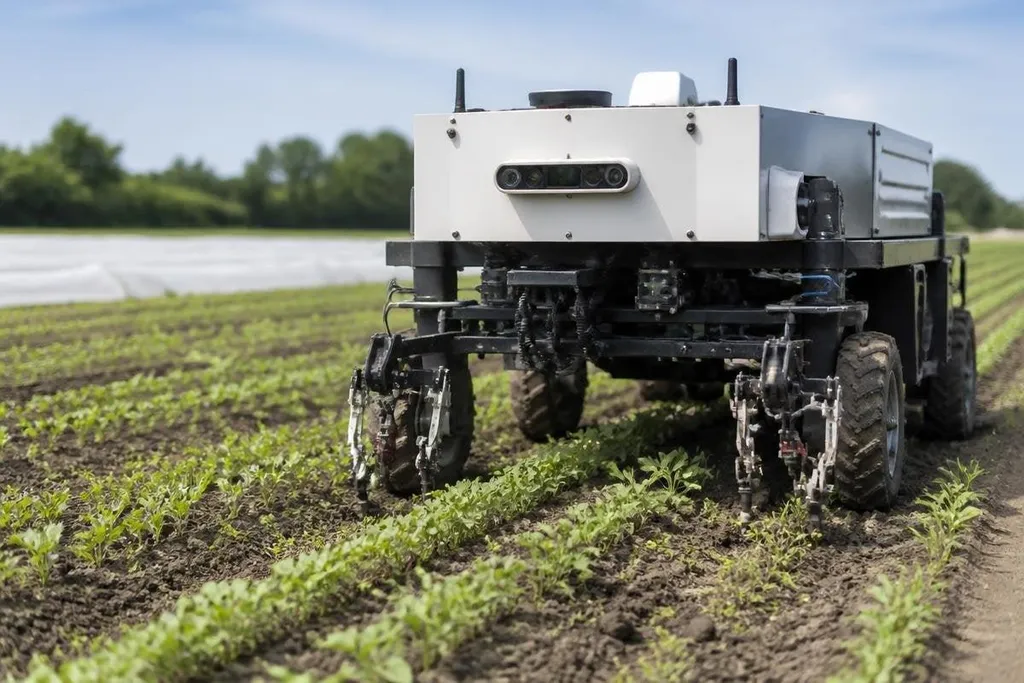
A weeding robot has to make two decisions over and over: what plant is in front of it, and where its tool can act. AI helps with the first decision by turning camera images into a map of crops, weeds, soil, and empty space.
Quick read
- Cameras give the robot plant images instead of relying on fixed row positions.
- Image software can mark likely weeds before a blade, hoe, or spray tool acts.
- Dust, shadows, crop damage, and new weed shapes can still cause errors.
What the robot sees
Older farm machines can follow crop rows and treat the space between them. That works when plants grow in neat lines and weeds stay outside those lines. A field rarely stays that tidy after rain, wind, soil movement, or uneven planting.
AI-based systems use cameras to inspect the ground as the robot moves. Image software looks for details such as leaf shape, color, plant position, and the gap between plants. It then marks areas that may contain weeds or crops.
The robot still needs a clear way to move. GPS can help it hold a broad route, while cameras or other sensors help it stay near the crop row. This split matters because GPS can guide the machine across a field, but it usually cannot tell a weed from a crop a few centimeters away.
How AI changes the tool’s job
Once the software marks a plant, the robot has to act at the right place and time. A mechanical hoe may cut soil near the crop. A blade may remove a weed between plants. A spray nozzle may treat a small target instead of covering the whole row.
The tool must also account for motion. The camera sees a plant before the tool reaches it, so the robot needs to estimate the robot’s speed and the plant’s position. A delay in image processing, wheel slip, or a bump in the soil can move the tool away from its target.
That is where AI connects to the rest of the machine. Plant recognition alone doesn't remove weeds. The software must pass a position to the control system, which moves the tool and checks that the machine remains on its route.
For a farm manager, the practical change is less blanket treatment and more plant-by-plant work. That can reduce the area treated, but the result depends on how often the robot misreads a crop, misses a weed, or stops for a case it cannot classify.
An AI weeding robot can identify a plant in clear light and stop when leaves hide the soil or weeds overlap. When you read Robot24, look for the crop, field conditions, robot speed, and human checks behind each result. Those details lead directly to the failure cases in the next section.
Where the system can fail
Plant images change during the season. A young crop may look close to a weed in one week, then become easier to identify as its leaves grow. The same weed can also look different under bright sun, cloud, dust, or shade.
Soil creates another problem. Wet ground can reflect light into the camera. Dry soil can cover small plants. Crop leaves may overlap, and a damaged crop may no longer match the images used to train the software.
A robot can respond by stopping when its confidence is low. That protects crops, but it also reduces the area covered during a work period.
If it keeps moving, it may remove a crop while trying to remove a weed. The right choice depends on the tool, crop value, field conditions, and the cost of human checks.
AI also needs examples from the fields where the robot will work. A model trained on one crop, soil type, or camera position may perform differently somewhere else. A sales demo under clear conditions doesn't prove that the machine will identify plants after rain or during a late-season growth burst.
A buying checklist
Before comparing an AI weeding robot, check these points:
- Plant targets: Ask which crops and weed types the software can identify today.
- Field conditions: Check how the maker tests dust, shadows, wet soil, and damaged leaves.
- Action tool: Find out whether the robot cuts, hoes, sprays, or uses another method.
- Fallback mode: Confirm what happens when the software cannot classify a plant.
- Human checks: Ask how operators review errors and update plant examples.
- Work records: Check whether the system stores images, plant locations, and missed targets.
I’d treat plant recognition as one part of the purchase, not the whole reason to buy. The useful question is whether the full machine can find a target, reach it without harming the crop, and show you what happened afterward.
The open measure is field performance over a full season. Until makers publish crop-safe hit rates, missed weeds, stops, and treatment area for named crops, AI weeding robots remain promising machines that still need close checking.